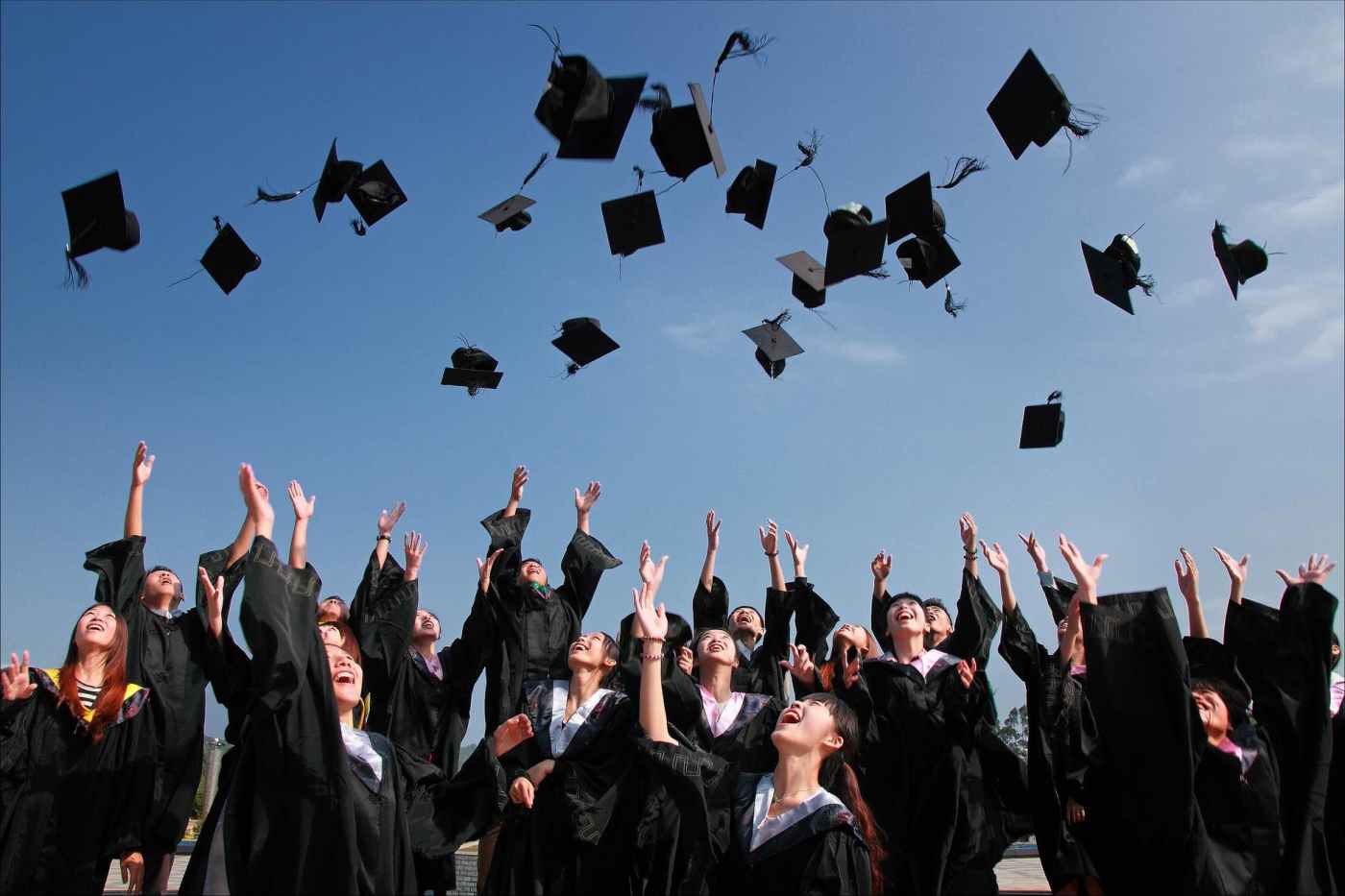
It is true that every higher education institution wants to show that it offers high quality learning and teaching. Higher education is very significant for a developing country like India and it also encourages increasing human development. Higher education in India has experienced major expansion since independence. India has produced best scientists, engineers, technologists, doctors, teachers and managers who all are in great demand all over the world.
Universities and colleges have always dealt with various issues particular to a time and place. With increasing expenses for college, it shouldn’t come as a surprise that there’s also an increase in the number of students who don’t complete their degrees. As such students are not capable of paying the fees. We continue to stay out of a recession, we should expect to see completion rates go back up, but sustained policy at the local, state and federal levels are required to fully address the challenge.
Now it is one of the top countries in our industrial and technological capacity, because of the important contribution of human power and tools provided by higher education, especially, technical department of education. India has already entered into the era of knowledge explosion. It has proved its fantastic potential by its performance in nuclear and space domains. In the coming few decades will be signal by space craft, satellites, internets and others offshoots of scientific enquires. Some studies taken up particularly on problems of colleges in different aspects.
Steven and Michael (1974) as quoted by Kalita, P. (2002) had considered the effects of some significant variables which influence on ‘Aspiration’. The results 70 indicated peer-modeling influence had the strongest effects on aspiration on students. They expressed that the impact of peer modeling behaviour on aspiration, was found to be significantly greater in rural than urban areas.
A Survey Report (2005) prepared by “Higher Education Research Institute” at the University of California published in “The Times Higher Supplement,October-14, 2005 revealed that more than 40 percent of the U.S. Academics in Universities feel the need and relevance of some comprehensive and systematic quality assurance mechanism in Higher Education
The need of the study on this particular issue is-
- Completion is the most powerful bar.
- Bachelor’s degree “addiction” is hurting students.
- Colleges need to do much more to help graduates get great jobs.
- Accountability shouldn’t start and end with for-profit colleges
- Assessments are needed to save the wide-ranging arts.
- Funding and fees
- Academic concerns are closely related to the mental health of children.
- Classroom performance affected by dyslexia
SUGGESTIONS
- Examination resolves- Examination reforms, gradually shifting from the terminal, annual and semester examinations to regular and continuous assessment of student’s performance in learning must be implemented.
- To Increase Quantity of Universities-We need more universities because we are more in number and present number of universities is too less.
- Cross Culture agenda– After education, tour to every the places in India and world as far as possible with the cooperation of government is necessary so that one can understand about people, culture, arts, literature, religions, technological developments and progress of human society in the world.
- Action Plan for enhancing Quality– Academic and administrative audit must be conducted once in three years in colleges by external experts for ensuring quality in all aspects of academic activities.
- World Class Education- Indian government is not giving priority to the development of Standard in education. India must aspire for the international standard in education.
LIMITATIONS AND CHALLENGES
- Insufficient facilities and infrastructure:
- Lower level of teaching quality:
- Research Restrictions:
- Uneven growth and access to opportunity:
- More concentrated on theories and rather than practical knowledge:
- Lack of involvement in and control of educational matters by Professors:
- Traditional methods of teaching:
- Abroad settlement after education:
BY MEHAK CHATURVEDI
 Street Paradise
Leave a comment